
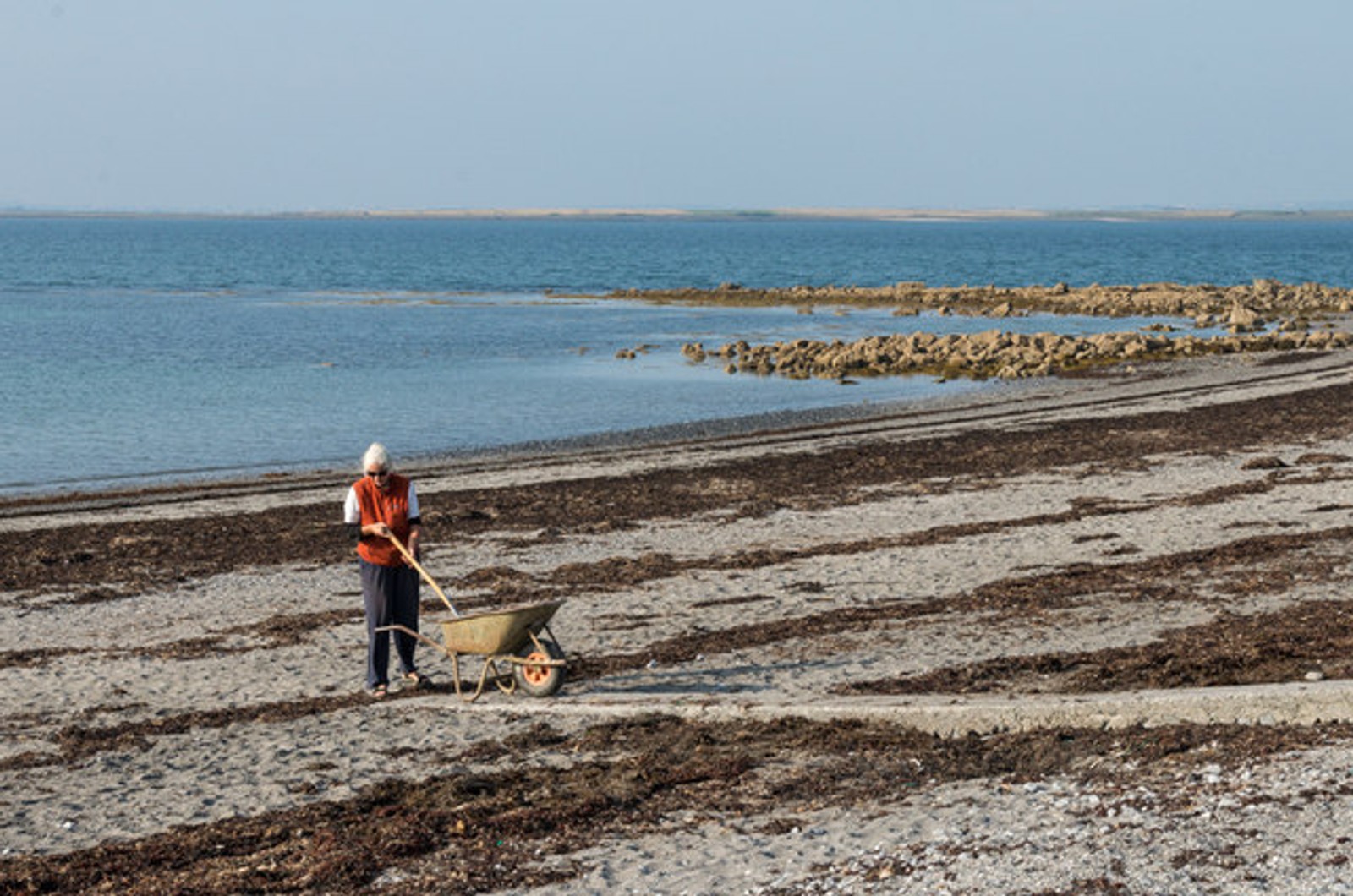
Imagine your family has fished the same waters, farmed the same land, for generations. It's not just a job; it's your heritage, your connection to the place you call home. Now, imagine a corporation swooping in, threatening to take that away. That's the reality facing communities along Ireland's west coast right now, where a battle is brewing over seaweed harvesting rights.
For families like Maidhc Ó Curraoin's, who has been harvesting seaweed for over a century, this isn't some abstract environmental debate. It's about putting food on the table and keeping a tradition alive. "This has been our way of life for generations," Ó Curraoin said, his voice thick with worry. "It's not just about the money, it's about our culture, our community, everything."
This has been our way of life for generations. It's not just about the money, it's about our culture, our community, everything.
The heart of the conflict is a renewed application by Arramara, a Canadian-owned company that was once part of Údarás na Gaeltachta, an Irish state agency. They're seeking the rights to harvest seaweed on a large scale across multiple bays in Galway, from Ros a Mhíl to Cloch na Rón. This area is where locals have traditionally harvested seaweed.
Seaweed isn't just some slimy stuff on the beach. It's a valuable resource, used in everything from food and cosmetics to fertilizers and pharmaceuticals. It’s also a growing industry, with Ireland positioning itself as a leader in what’s called "regenerative ocean farming." Arramara claims its operations inject at least €4 million directly into the local economy.
Injected into local economy
But locals fear that Arramara's industrial-scale ambitions will squeeze out traditional harvesters, disrupting a way of life that has sustained them for generations. They worry about the impact on the environment and the long-term sustainability of seaweed stocks. It's a classic David-versus-Goliath scenario, with small communities fighting against a corporation with deep pockets.
"It feels like a corporate takeover of our livelihoods," one local fisherman, who asked not to be named for fear of reprisal, told reporters. "They want to come in and take everything for themselves, leaving nothing for us."
This isn't the first time Arramara's plans have sparked controversy. An earlier application to harvest seaweed on an industrial scale from north Mayo to north Clare was shelved after facing fierce opposition. Now, with this revised application focused on Galway, the fight is on again.
So, why should you care, even if you've never seen the Irish coast? Because this story is a microcosm of a larger global trend. All over the world, local communities are facing similar challenges, as corporations seek to exploit natural resources for profit, often at the expense of traditional livelihoods and environmental sustainability. It raises fundamental questions about who owns our natural resources and who gets to decide how they are used.
Seaweed harvesting is hard work. It involves wading into the cold Atlantic waters, often in harsh weather conditions, to cut and collect the seaweed by hand. It's a skill passed down through families, a connection to the sea that runs deep. But it’s also a vital part of the local economy, providing income for families who depend on it.
Arramara argues that its operations are sustainable and that it provides valuable jobs and investment in the area. They point to the €4 million they say they contribute to the local economy. But critics argue that the company's focus on large-scale harvesting could deplete seaweed stocks, harming the environment and undermining the long-term viability of the industry. They also question whether the jobs created by Arramara will truly benefit local communities, or whether they will be low-wage, seasonal positions.
The fight over seaweed rights highlights a growing tension between economic development and the preservation of traditional ways of life. It's a story about power, about who gets to control access to natural resources, and about the importance of protecting local communities and their cultural heritage.
What's next? The local communities are gearing up for a long fight. They're organizing protests, lobbying politicians, and raising awareness about the issue. They're determined to protect their traditional rights and ensure that their voices are heard. For them, it's not just about seaweed; it's about their identity, their community, and their future. They're hoping their fight will not only save their livelihoods but also set a precedent for other communities facing similar challenges around the world. This isn’t just an Irish story; it’s a story about the fight for local control in a globalized world.
"We're not going to give up," Ó Curraoin vowed. "We'll fight this all the way. This is our home, our livelihood, our heritage. We're not going to let a corporation take it away from us."

Founder and Editor in Chief of The Irish Bugle.