
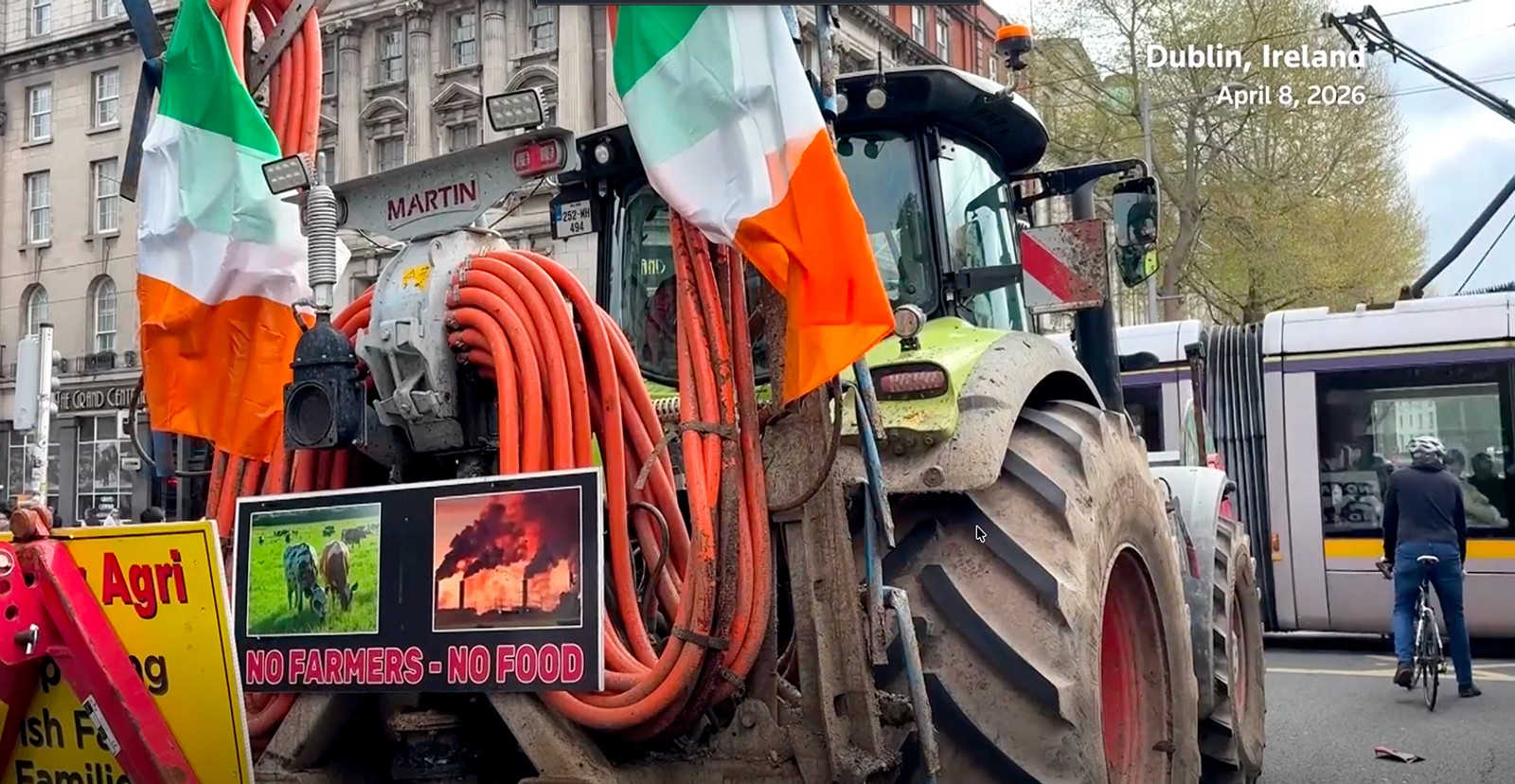
The price of a litre of petrol isn't just about supply and demand; it’s about geopolitics, imperial ambition, and the bloody cost of maintaining a global order rigged in favour of the few. As fuel protests paralyse parts of Ireland, with the Government scrambling for solutions and threatening intervention from the Irish Defence Forces to move vehicles blocking infrastructure, it's time to ask: are we truly grappling with the roots of this crisis, or simply treating the symptoms? The Government is scheduled to meet with various representative groups, including potentially fuel protesters, to discuss the ongoing fuel crisis, a meeting protest organizers claim includes negotiators who will join a large meeting at Government Buildings tomorrow (April 10, 2026).
The immediate trigger is clear: soaring fuel prices are crippling ordinary people, farmers, agricultural contractors, and the haulage industry, all of whom are impacted. But to understand why prices are soaring, we must look beyond Dublin and consider the powder kegs of the Middle East, where the flow of oil – and the fortunes of nations – are perpetually held hostage.
The Strait of Hormuz
Consider the Strait of Hormuz, the narrow sea lane through which a significant percentage of the world's oil supply passes. Any disruption here – whether through accident, sabotage, or outright conflict – sends shockwaves through global markets, instantly impacting prices at the pump in Dublin. And who are the major players vying for control in this volatile region? The usual suspects: the US, Israel, and Iran, locked in a perpetual dance of aggression and counter-aggression.
The US, with its insatiable appetite for oil and its unwavering support for Israel, has long sought to contain Iran, viewing it as a threat to its regional dominance. This has manifested in crippling sanctions, military posturing, and covert operations, all of which contribute to instability and increase the risk of a major conflagration.
Israel, meanwhile, views Iran's nuclear programme as an existential threat and has repeatedly threatened military action to prevent it from developing nuclear weapons. This bellicose rhetoric, coupled with Israel's own undeclared nuclear arsenal, further escalates tensions and creates a climate of constant crisis.
And what is Iran's role in all of this? A nation understandably determined to defend its sovereignty and pursue its own interests in a region dominated by hostile powers. While Iran's actions are often portrayed as inherently aggressive, they are, in many ways, a response to decades of Western interference and meddling in its affairs.
So, how does all of this relate to the fuel protests in Ireland? Simply put, our dependence on a globalised oil market makes us vulnerable to the geopolitical machinations of powerful states thousands of miles away. Every time the US ratchets up sanctions on Iran, every time Israel threatens military action, every time tensions escalate in the Strait of Hormuz, the price of petrol in Ireland goes up. We are, whether we like it or not, complicit in this system.
And what is our government doing about it? Are they actively seeking to diversify our energy sources, reduce our reliance on fossil fuels, and promote a more just and equitable global order? Or are they simply paying lip service to these goals while continuing to prop up a system that benefits multinational corporations and perpetuates conflict?
The deployment of the Irish Defence Forces to deal with fuel protesters... is a stark reminder of the limits of state power in the face of a global crisis.
The deployment of the Irish Defence Forces to deal with fuel protesters, to prevent further disruption, is a stark reminder of the limits of state power in the face of a global crisis. You can move the trucks, but you can't fix the underlying problem. The protests are a symptom of a much deeper malaise: a broken economic system, a lack of energy security, and a foreign policy that prioritises the interests of powerful states over the needs of ordinary people.
Ireland, as a small, neutral nation, has a unique opportunity to play a constructive role in de-escalating tensions and promoting peace. We can start by challenging the dominant narratives that demonise Iran and justify Western interventionism. We can use our voice on the international stage to advocate for diplomacy, dialogue, and a more just and equitable distribution of resources.
But this requires a fundamental shift in our thinking. We need to move beyond the simplistic good vs. evil narratives that dominate mainstream discourse and recognise the complex historical and political factors that drive conflict. We need to be willing to question the assumptions that underpin our foreign policy and challenge the power structures that perpetuate inequality.
The fuel protests in Ireland are a wake-up call. They are a reminder that we cannot afford to ignore the geopolitics of oil, the machinations of powerful states, and the human cost of maintaining a global order rigged in favour of the few. It's time for Ireland to rethink its dependence on the US and its allies, and chart a new course towards energy independence, peace, and justice.
The situation demands more than just short-term fixes. It demands a radical reimagining of our energy policy, our foreign policy, and our relationship to the global economy. It demands a commitment to building a more just and sustainable future, not just for Ireland, but for the entire world. The deployment of the Irish Defence Forces, highlights the urgent need for real solutions. Are we up to the challenge? The future depends on it. The question now is, will the upcoming meeting between the government and representative groups, be a genuine attempt to address these systemic issues, or just another exercise in damage control? The answer will determine not only the price of petrol, but the future of our nation.

Founder and Editor in Chief of The Irish Bugle.