
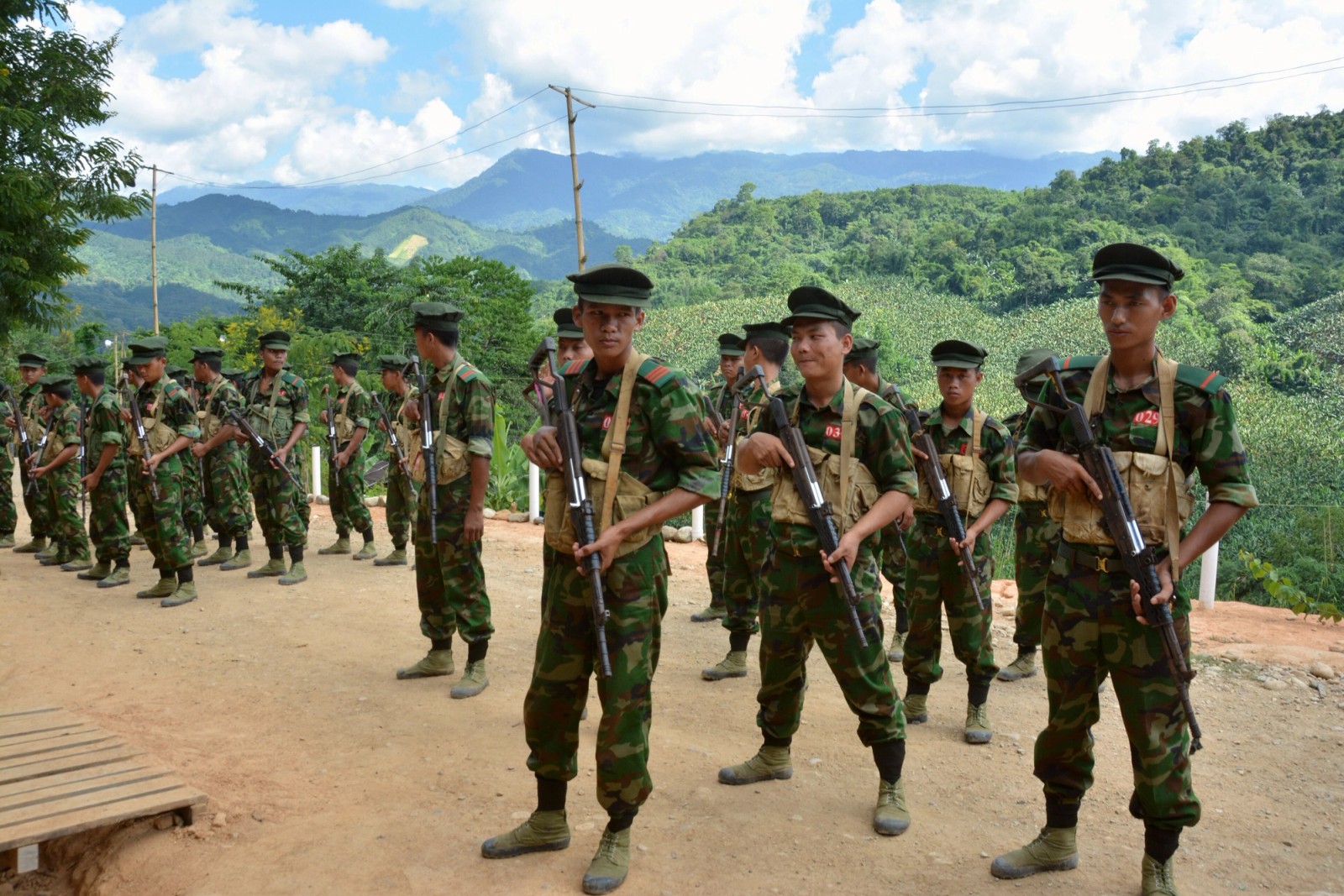
India's anti-terror laws, notorious for their draconian reach, have ensnared seven foreign nationals, six Ukrainians and one American, accused of aiding insurgents across the border in Myanmar. But is this a genuine crackdown on international terrorism, or a convenient excuse to silence dissent and flex geopolitical muscle?
The National Investigation Agency (NIA), India's premier anti-terror body, is leading the charge, alleging a vast network funneling arms and training to rebel groups operating within Myanmar. The arrests, shrouded in secrecy, have ignited a firestorm of controversy, raising questions about the evidence, the motivations, and the potential for a gross miscarriage of justice.
The American in the crosshairs is Matthew VanDyke, a name familiar to those who follow the murky world of freelance conflict journalism and private military contracting. VanDyke, known for his pro-rebel stance and self-proclaimed "adventure tourism," has a history of embedding with opposition forces in war zones. This track record, coupled with the timing of the arrests, has fueled speculation that India is cracking down on any perceived threat to its regional interests, regardless of the nuance or the individuals involved.
"They are accused of training certain groups," sources close to the investigation have stated, hinting at the core of the NIA's case.
But the specifics remain frustratingly vague. Which groups? What kind of training? And what evidence links these individuals directly to acts of violence or terrorism? The devil, as always, is in the details, and in this case, the details are conspicuously absent.
The use of anti-terror laws in this context is particularly troubling. These laws, often vaguely worded and broadly applied, grant authorities sweeping powers of arrest and detention, making it difficult for the accused to mount a credible defense. Human rights organizations have long criticized India's anti-terror legislation for its potential for abuse and its chilling effect on freedom of expression.
Is India genuinely concerned about the destabilizing influence of foreign fighters in Myanmar, or is it exploiting the situation to send a message to its neighbors and to its own citizens? The answer, likely, is a bit of both. India has long been wary of the simmering conflicts along its borders, and the rise of armed resistance movements in Myanmar poses a direct threat to regional stability. At the same time, the Modi government has shown a disturbing willingness to use national security as a justification for suppressing dissent and consolidating power.
VanDyke's past actions will undoubtedly be scrutinized. A quick search reveals a history of involvement in conflict zones, often with a clear bias toward anti-government forces. While not inherently illegal, this history paints a picture of someone deeply invested in the outcome of these conflicts, raising legitimate questions about his motives and his activities in the region. However, possessing strong opinions and a penchant for adventure is not, in itself, a crime.
The Ukrainian connection adds another layer of complexity to the story. Ukraine, currently embroiled in its own existential struggle against Russian aggression, has a vested interest in supporting resistance movements against authoritarian regimes. Could these Ukrainian nationals be part of a covert operation to assist the rebels in Myanmar, or are they simply caught in the crossfire of a geopolitical game they barely understand?
The Indian media, largely echoing the government's narrative, has been quick to portray the arrests as a major victory in the fight against terrorism. However, independent voices are beginning to emerge, questioning the official story and demanding greater transparency. "The arrests were made under an anti-terror law," outlets like NDTV reported, but they failed to critically examine the justification for using such a heavy-handed legal tool.
The case has also drawn attention to the murky world of arms trafficking and private military contracting. Myanmar, awash in weapons and plagued by decades of civil war, has become a magnet for mercenaries and arms dealers from around the globe. The involvement of foreign nationals in these conflicts is nothing new, but the scale and the sophistication of the operations are constantly evolving.
The NIA claims to be probing a "wider network" connected to the arrests, suggesting that this is just the tip of the iceberg. But who are the other players involved? What are their connections to the rebel groups in Myanmar? And what is the ultimate goal of this alleged conspiracy? Until these questions are answered, the arrests will remain shrouded in suspicion and uncertainty.
The international community has remained largely silent on the issue, perhaps hesitant to interfere in India's internal affairs. However, human rights organizations are closely monitoring the situation, concerned about the potential for abuse and the erosion of due process. The right to a fair trial, the presumption of innocence, and the right to legal representation are fundamental principles that must be upheld, regardless of the accusations leveled against these individuals.
The Indian government must be held accountable for ensuring that these principles are respected. The NIA must present credible evidence to support its claims, and the accused must be given a fair opportunity to defend themselves. The world is watching, and the reputation of India's justice system is on the line.
The arrest of Matthew VanDyke and the six Ukrainian citizens raises troubling questions about the balance between national security and individual rights. Are these individuals genuine threats to regional stability, or are they being scapegoated to serve a larger political agenda? The answer, like the conflict in Myanmar itself, is far from clear. One thing is certain: this case will have significant implications for the future of human rights and international justice in the region. The use of anti-terror laws to silence dissent, the lack of transparency in the investigation, and the potential for a miscarriage of justice all point to a disturbing trend. It's a reminder that even in democracies, the fight for freedom and justice is a constant struggle, and that we must always be vigilant in defending the rights of the marginalized and the vulnerable.
So, what's next? Will India release the evidence? Will VanDyke and his companions see a fair trial, or become pawns in a larger game? The world waits, with bated breath, to see if justice will prevail or if the anti-terror narrative will trump all.

Founder and Editor in Chief of The Irish Bugle.