
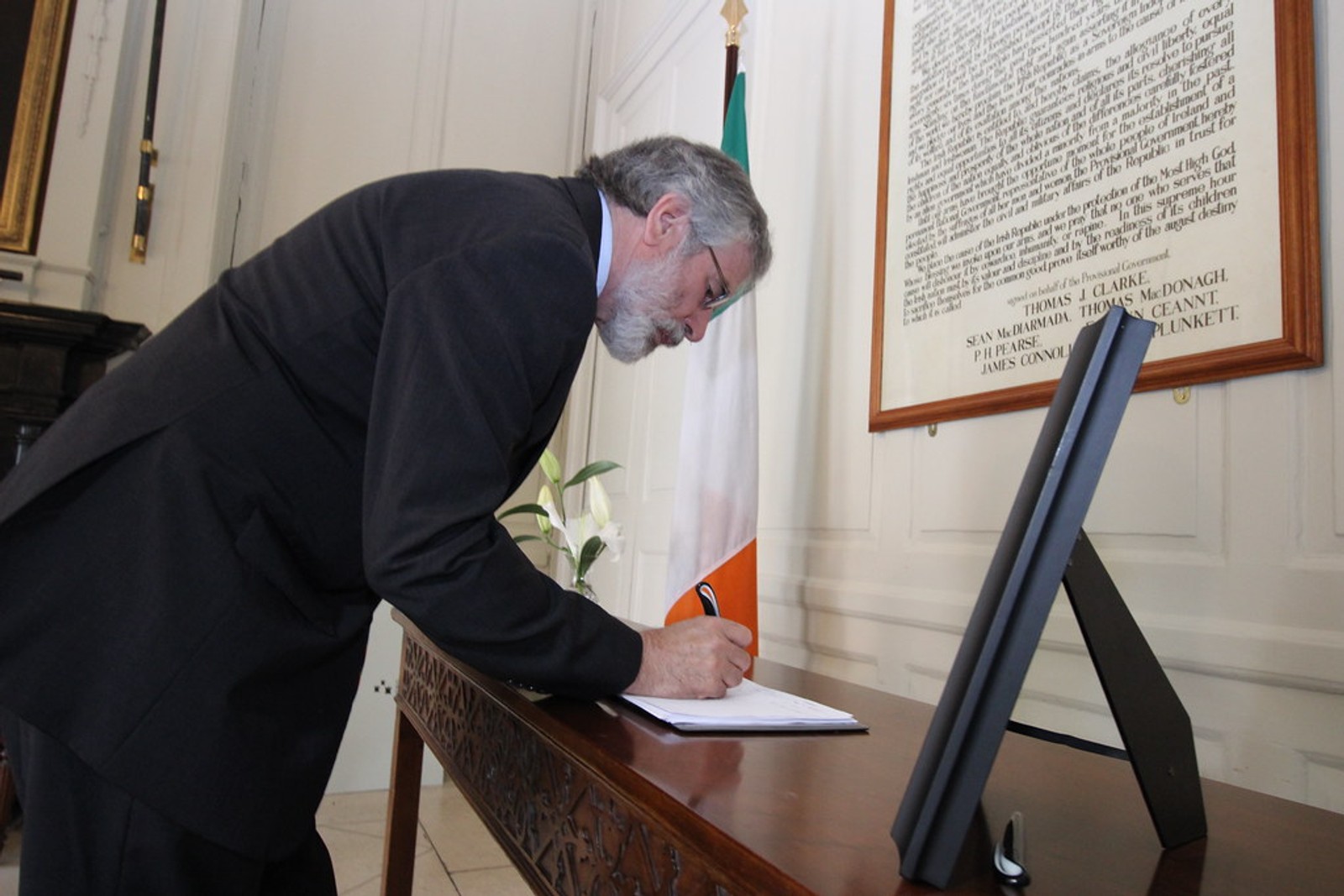
Gerry Adams, a name synonymous with the Irish struggle for independence, is set to face trial in Britain's High Court around March 9, 2026. But why London? The case, titled 'John Clark and others -v- Gerry Adams', immediately raises hackles. Is this justice being served, or another chapter in the long and often brutal history of Anglo-Irish relations? The optics, as they say, are grim.
The fact that a case of such significance to Irish history and identity is being heard in a British court is, to put it mildly, provocative. John Clark and others are bringing the case, but the decision to hear it in London, rather than Belfast, begs the question: whose justice is being served here? It smacks of the kind of interference that has fueled centuries of resentment and resistance.
"The trial being held in London feels like a slap in the face, it's like they still think they can dictate what happens here. They haven't learned a thing."
This isn't just about legal procedure; it's about power. It's about the lingering shadow of British imperialism and the perception that London still believes it has a right to meddle in Irish affairs. The trial threatens to reopen old wounds and reignite long-dormant tensions.
Yet, here we are, with a trial of immense historical and political weight being staged on British soil. The very location undermines the legitimacy of the proceedings in the eyes of many Irish people. It's a stage set for a kangaroo court, or at the very least, the *appearance* of one. Forget the legal arguments for a moment; the symbolism is poisonous.
It's not just about the past, either. The timing of this trial, with Brexit still casting a long shadow and the complexities of the Irish border still unresolved, adds another layer of fuel to the fire. Are British courts truly capable of delivering impartial justice in a case so deeply intertwined with Irish history and politics? Or is this a cynical attempt to exert influence and undermine Irish sovereignty?
We must remember the history of British injustice in Ireland, from the Black and Tans to Bloody Sunday. This history casts a long shadow, and any legal process that seems to further it must be met with scrutiny and resistance. Why couldn't this case be heard in Ireland, where the events in question took place and where the consequences are most keenly felt? The answer, it seems, lies in the long and troubled history of Anglo-Irish relations, a history marked by oppression, exploitation, and a persistent refusal to treat Ireland as an equal partner.
The trial of Gerry Adams in London is more than just a legal matter; it's a battle for the narrative. It's a test of whether Britain is truly willing to let go of the past and treat Ireland with the respect it deserves. The world will be watching, and the stakes are higher than ever. So, let the trial begin. But let's not pretend it's anything other than what it is: a reminder that the fight for Irish sovereignty and justice is far from over. The stench of injustice is thick in the air, and it's up to us to demand a fair hearing, a transparent process, and a verdict that is not tainted by the ghosts of empire. This isn't just about one man; it's about the soul of a nation. What can we do? Demand transparency. Question the motives. And never forget the long and painful history that has brought us to this moment. It's time to hold Britain accountable for its past and demand justice for Ireland, in Ireland.

Founder and Editor in Chief of The Irish Bugle.