
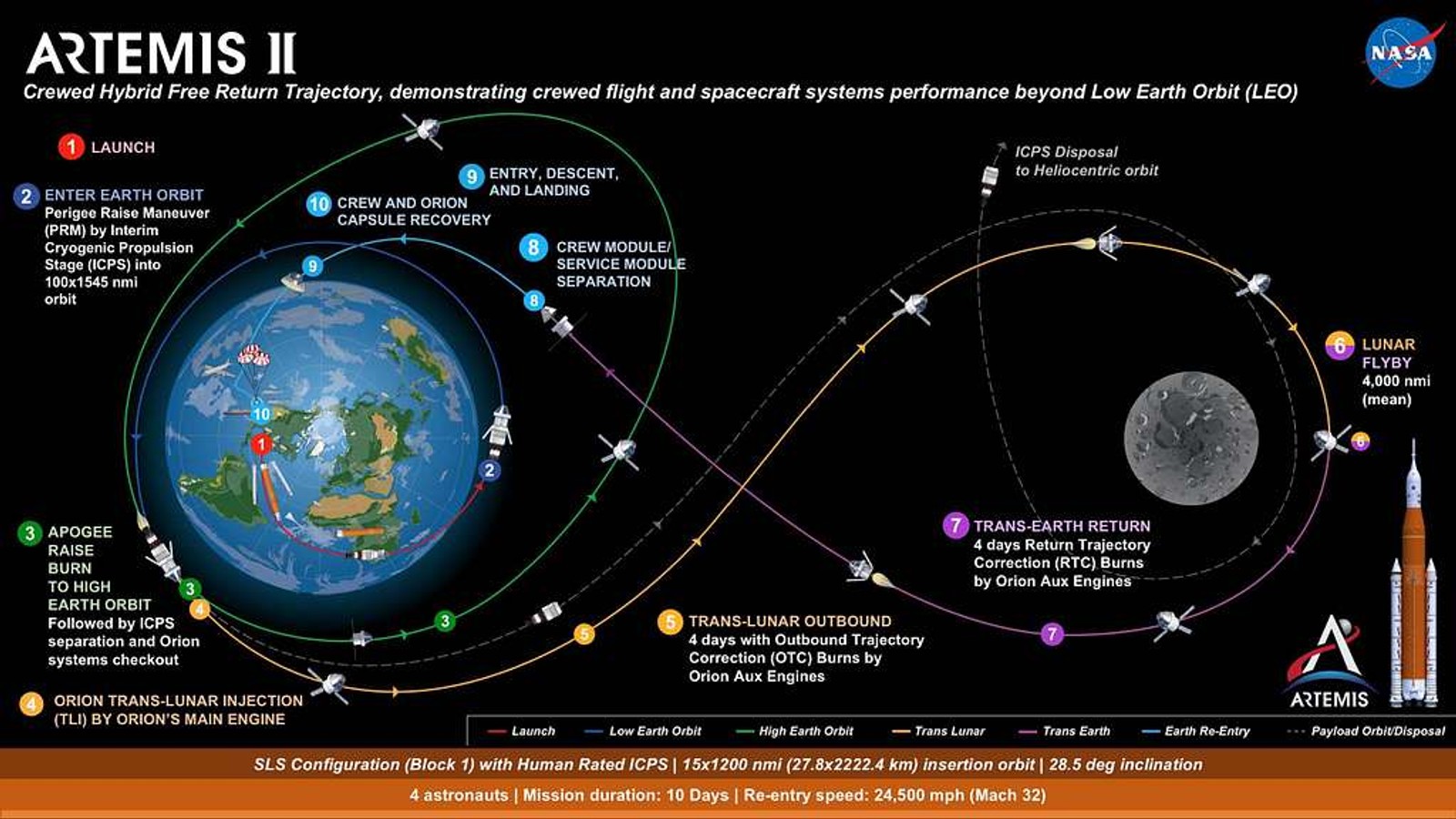
The void screamed silence for forty excruciating minutes. Forty minutes where four brave souls, hurtling further from Earth than any human in history, vanished behind the dark side of the Moon. Forty minutes that felt like an eternity to mission control, and undoubtedly, to the Artemis II crew themselves. But as planned, the silence is broken. Contact has been re-established, the record shattered, and a new chapter in human space exploration has begun.
NASA’s Artemis II mission, the first lunar flyby in over half a century, has not only rekindled the flame of lunar ambition but has also pushed the boundaries of human reach. The mission, a testament to international collaboration and human ingenuity, saw its four-member crew surpass the distance record previously held by Apollo 13 – a mission synonymous with peril and resilience. Now, they're sending back invaluable, detailed observations of our celestial neighbor.
The sheer audacity of this mission is breathtaking.
The sheer audacity of this mission is breathtaking. To willingly slingshot around the Moon, enduring a near-hour-long communication blackout as you traverse its far side, speaks volumes about the courage and dedication of the astronauts involved. This blackout, a natural consequence of the Moon’s bulk obstructing radio waves, was nonetheless a stark reminder of the inherent risks of deep space travel. The period of radio silence was a tense moment, highlighting the precarious nature of pushing the boundaries of human exploration. But the reward, it seems, is well worth the risk.
"Contact!" The word, crackling through mission control, signals more than just a successful re-establishment of communication. It represents a triumph over technological hurdles, a victory for human determination, and a giant leap toward establishing a permanent lunar presence. The data gathered during this flyby will be crucial in planning future missions, including the ambitious Artemis III, which aims to land astronauts on the Moon's south pole.
The Artemis program, of which Artemis II is a crucial stepping stone, represents a renewed commitment to lunar exploration. But this isn't just about planting flags and collecting rocks. This is about establishing a sustainable presence, developing technologies for resource utilization, and ultimately, preparing for crewed missions to Mars. It’s a bold vision, and one that demands international cooperation.
The re-emergence of a space race, particularly between the United States and China, is undeniable. Both nations have ambitious plans for lunar bases and resource extraction, fueled by the strategic importance of the Moon and its potential resources. However, rather than viewing this as a purely competitive endeavor, it's imperative to foster collaboration and knowledge sharing. The challenges of deep space exploration are immense, and humanity stands a far greater chance of success if we work together.
Imagine a future where astronauts from diverse nations collaborate on the lunar surface, building habitats, extracting water ice, and conducting groundbreaking scientific research. Envision a network of lunar bases, powered by renewable energy and serving as a springboard for even more ambitious missions to Mars and beyond. This isn't science fiction; it's a tangible possibility, provided we embrace cooperation over competition.
Russia, with its decades of experience in spaceflight, could bring invaluable expertise to a collaborative lunar program. The European Union, with its advanced robotics and scientific instrumentation, could contribute significantly to lunar research and resource utilization. Even India, with its burgeoning space program and cost-effective approach, could play a vital role in developing innovative solutions for lunar exploration.
The benefits of international collaboration extend far beyond the realm of space exploration. By working together on projects of this magnitude, nations can foster trust, build bridges, and address global challenges in a spirit of unity. The Artemis program, therefore, represents not only a scientific endeavor but also a powerful symbol of human potential and international cooperation.
But let's not forget the human element. The Artemis II crew, whose names will forever be etched in the annals of space exploration, are not just astronauts; they are pioneers, explorers, and ambassadors for humanity. Their courage, dedication, and unwavering commitment to pushing the boundaries of human knowledge serve as an inspiration to us all. Their detailed observations, transmitted back to Earth after that agonizing blackout, are a testament to their professionalism and the importance of their mission.
This mission marks a significant milestone in our journey to understand the universe and our place within it. It's a reminder that even in the face of daunting challenges, humanity can achieve extraordinary feats through collaboration, innovation, and unwavering determination.
The new space race, therefore, shouldn't be about nationalistic one-upmanship. It should be about inspiring the next generation of scientists, engineers, and explorers. It should be about pushing the boundaries of human knowledge and technological innovation. And it should be about uniting humanity in a common purpose: to explore the cosmos and unlock the secrets of the universe.
The Artemis II mission, with its record-breaking distance, is a powerful reminder that anything is possible when we dare to dream big and work together. Let's seize this moment, embrace the spirit of exploration, and embark on a new era of international cooperation in space. The Moon, and perhaps even Mars, awaits. And with a united front, humanity can reach for the stars and unlock a future beyond our wildest imaginations.
As the Artemis program continues to unfold, it is essential to maintain a balanced perspective. While celebrating the remarkable achievements and technological advancements, we must also address the ethical and environmental considerations associated with lunar exploration. The potential for resource extraction raises important questions about sustainability and the long-term impact on the lunar environment. It is crucial that these activities are conducted responsibly and in accordance with international guidelines.
Furthermore, the involvement of private companies in space exploration raises concerns about commercialization and the potential for exploitation. It is imperative that governments and international organizations establish clear regulations and oversight mechanisms to ensure that the benefits of space exploration are shared equitably and that the interests of all humanity are protected.
In addition to the United States and China, other nations are also making significant contributions to space exploration. The European Space Agency (ESA) is developing advanced technologies for lunar and Martian missions, while Japan and India are pursuing their own ambitious space programs. By fostering collaboration and knowledge sharing among these nations, we can accelerate the pace of discovery and ensure that the benefits of space exploration are shared globally.
The Artemis II mission serves as a powerful reminder of the potential for human ingenuity and international cooperation to overcome seemingly insurmountable challenges. By embracing a spirit of collaboration and innovation, we can unlock the secrets of the universe and create a brighter future for all of humanity. The Moon is just the first step on this extraordinary journey, and with a united front, we can reach for the stars and achieve the impossible.

Founder and Editor in Chief of The Irish Bugle.