
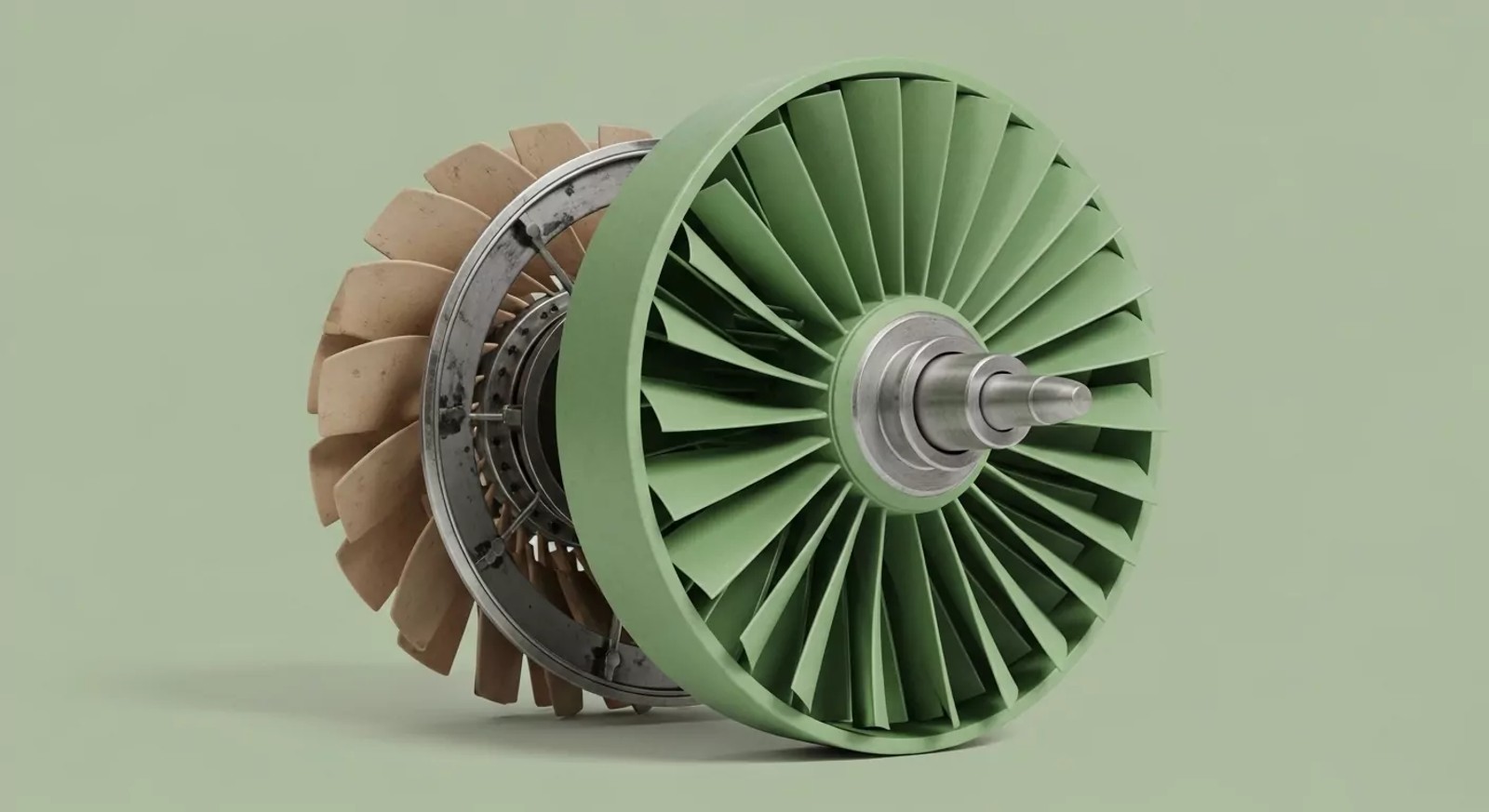
China has powered up the world's first supercritical carbon dioxide (sCO2) power generation unit, a development hailed as a potential game-changer in energy efficiency. But what exactly does this mean, and is it truly a revolution in power generation or just an interesting experiment?
Let's break down the core concept: supercritical CO2. Carbon dioxide, the gas we exhale, can exist in different states: solid (dry ice), liquid, and gas. However, when you crank up the temperature and pressure of CO2 beyond a certain point – its critical point – it enters a 'supercritical' state. In this state, it acts like both a gas and a liquid, possessing properties of both. This unique combination allows it to carry heat extremely efficiently.
Think of it like this: Imagine you are trying to spin a water wheel. You could pour water onto it (liquid), or you could blow air at it (gas). Supercritical CO2 is like a super-powered fluid that combines the force of both, allowing it to spin the wheel faster and more efficiently. In this case, the 'water wheel' is a turbine that generates electricity.
Why Supercritical CO2 Matters
The key advantage of using sCO2 in power generation is its potential for increased efficiency. Traditional power plants, whether they burn coal, natural gas, or even use nuclear energy, rely on steam to turn turbines. Supercritical CO2 turbines promise to extract more energy from the same amount of fuel, or generate the same amount of power with less fuel. This translates to lower fuel costs, reduced emissions, and a smaller environmental footprint. Efficiency gains could be significant.
China's 'Chaotan One,' located in Shandong Province, is the first commercial-scale demonstration of this technology. The project is considered a 'flagship' by Chinese officials. The promise of greater efficiency explains the global interest. This project aims to validate the technology's viability and identify potential challenges.
The Hurdles Ahead
Despite the excitement, significant challenges remain. Supercritical CO2 turbines operate under extreme conditions – high temperatures and pressures – which can put a tremendous strain on materials. The long-term reliability and durability of these turbines are still uncertain. Material science is crucial here, as engineers need to develop alloys that can withstand these harsh conditions for extended periods.
Another challenge lies in the complexity of sCO2 systems. Maintaining the precise temperature and pressure required for supercriticality demands sophisticated control systems. Any disruption or instability can lead to a drop in efficiency or even system failure.
Different Perspectives
The development of supercritical CO2 turbines has sparked varied reactions. Optimists see it as a crucial step towards a cleaner and more efficient energy future. They point to the potential for significant efficiency gains and reduced emissions. They view China's investment in this technology as a sign of its commitment to innovation and environmental sustainability.
Skeptics, on the other hand, caution against premature celebration. They emphasize the unresolved technical challenges and the lack of long-term operational data. They argue that the technology is still in its early stages of development and that widespread adoption is unlikely in the near future. Some analysts suggest that the actual performance of Chaotan One will need to be observed over an extended period to determine its true value.
Furthermore, the source of the CO2 itself is a consideration. If the CO2 used in the process is captured from existing industrial sources or directly from the atmosphere, it could contribute to carbon capture and storage efforts. However, if the CO2 is generated from burning fossil fuels, the overall environmental benefit may be less significant.
Supercritical CO2 turbines promise to extract more energy from the same amount of fuel, or generate the same amount of power with less fuel.
Ultimately, the success of China's supercritical CO2 turbine will depend on its ability to overcome the technical hurdles and demonstrate long-term reliability and economic viability. While the technology holds immense promise, it remains to be seen whether it will truly revolutionize the power generation industry or become a niche application.

Founder and Editor in Chief of The Irish Bugle.