
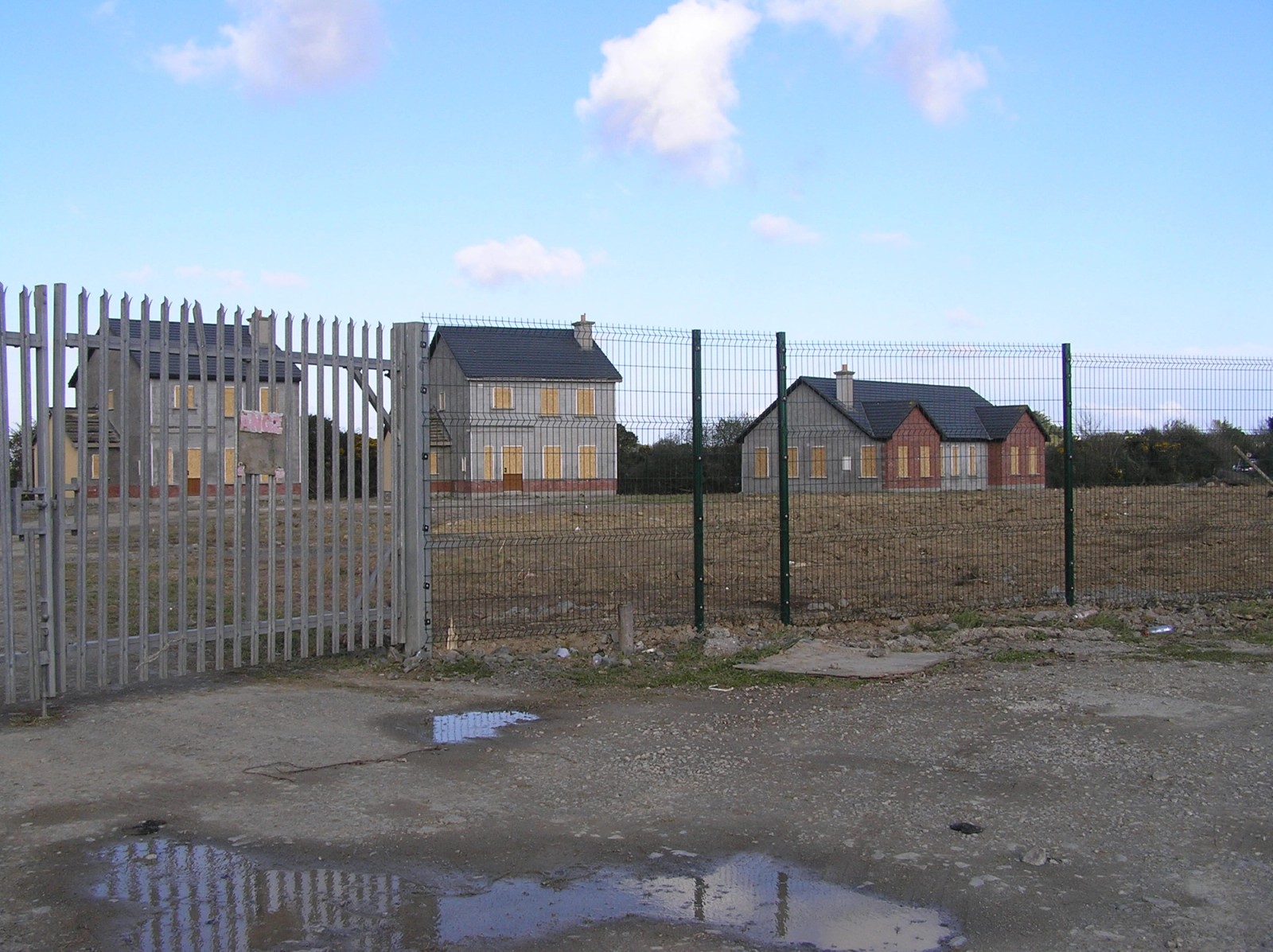
Two decades. That's how long Ireland has lived with the specter of its ghost estates – skeletal remains of a boom gone bust, standing as monuments to unchecked greed and regulatory failure. Almost sixty of these hollowed-out developments still scar the landscape, even as the country grapples with a housing crisis so acute that over 17,000 people experienced homelessness last month, an all-time record, according to RTÉ News. The question isn't just why these estates remain unfinished, but who is paying the price for the developers who walked away with their pockets lined? The answer, as always, is the ordinary people of Ireland.
The rot runs deep. In Wexford, the *Irish Independent* reports that developers disappeared with ‘millions in their pockets’ while the council is left to ‘pick up the slack’ at unfinished housing estates. This isn't an isolated incident; it’s a systemic problem. Developers made fortunes during the boom, building estates that were often poorly planned, shoddily constructed, and ultimately, unsustainable. When the crash came, many simply abandoned these projects, leaving half-built houses to crumble, roads to disintegrate, and communities to wither.
Developers disappeared with ‘millions in their pockets’ while the council is left to ‘pick up the slack’ at unfinished housing estates.
The human cost is staggering. These ghost estates aren't just eyesores; they're symbols of broken promises and shattered lives. Families bought homes in these developments, only to find themselves living in isolated, unfinished environments with inadequate infrastructure, limited services, and plummeting property values. The dream of homeownership turned into a nightmare of negative equity and social isolation. Moreover, the existence of these estates exacerbates the current housing crisis, tying up land and resources that could be used to provide much-needed homes for those who are currently homeless.
But who is accountable? The developers who profited handsomely from the boom years have largely escaped scrutiny. Many have gone on to new ventures, leaving a trail of devastation in their wake. The banks, which recklessly financed these developments, have also largely avoided punishment, shielded by government bailouts and regulatory loopholes. And what of the local councils, who approved these projects in the first place? Were they simply naive, or were they complicit in the feeding frenzy of the boom years?
The Wexford Council's situation is a microcosm of the larger issue. They are now forced to spend scarce resources to maintain these unfinished estates, dealing with problems like overgrown weeds, crumbling infrastructure, and illegal dumping. Meanwhile, they are struggling to provide basic services to the residents who are still living in these developments. The Council is in a bind, forced to clean up the mess left behind by developers who are long gone.
'It's like the Wild West,' says a local resident, who spoke to *The Irish Bugle* on the condition of anonymity, fearing retribution. 'These developers came in, made their money, and then just disappeared. Nobody seems to care about the people who are left behind.' The resident, a mother of two, bought a house in one of the ghost estates in 2006. She and her husband were drawn to the promise of a new community and affordable housing. But within a few years, their dream had turned into a nightmare. The estate was never finished, the roads were never paved, and the promised amenities never materialized. 'We're trapped,' she says. 'We can't sell our house because it's worth less than what we paid for it. We're stuck living in a ghost estate with no hope of escape.'
'We're trapped,' she says. 'We can't sell our house because it's worth less than what we paid for it. We're stuck living in a ghost estate with no hope of escape.'
The government's response to the ghost estate crisis has been slow and inadequate. While various initiatives have been launched to address the problem, progress has been painfully slow. Bureaucracy, legal challenges, and a lack of funding have all hampered efforts to resolve the issue. Meanwhile, the homelessness crisis continues to worsen, highlighting the urgent need for more decisive action.
The almost 60 ghost estates remaining are not just a problem for the people who live in them, they are a problem for all of Ireland. They are a symbol of our failure to learn from the mistakes of the past. They are a reminder of the greed and recklessness that fueled the boom, and the devastating consequences that followed. They are a stain on our national conscience.
The solution to the ghost estate crisis is not simply to demolish these unfinished developments. It is to hold those responsible accountable for their actions. It is to demand that developers, banks, and local councils take responsibility for the mess they have created. It is to ensure that such reckless behavior is never allowed to happen again.
But accountability seems a distant prospect. The wheels of justice turn slowly, if at all. Many of the developers who profited from the boom have moved on, shielded by legal loopholes and political connections. The banks have been bailed out by the government, and their executives have escaped prosecution. And the local councils, while struggling to cope with the consequences of the crisis, have largely avoided scrutiny.
Ultimately, the ghost estate crisis is a symptom of a deeper malaise in Irish society. It is a reflection of our tendency to prioritize short-term profits over long-term sustainability, to reward greed and recklessness, and to protect the powerful at the expense of the vulnerable. Unless we address these fundamental issues, the ghost estates will continue to haunt us, serving as a constant reminder of our past failures and our present injustices.
people experiencing homelessness
The 17,000 people experiencing homelessness are not just statistics; they are human beings with hopes and dreams. They are families, children, and individuals who have been failed by our society. They are the victims of a housing crisis that has been exacerbated by the ghost estate debacle. Their stories are a call to action. We must demand that our government take immediate steps to address the homelessness crisis and to ensure that everyone has access to safe, affordable housing.
As Ireland struggles to emerge from the shadow of the financial crash, the ghost estates stand as a stark reminder of the price of unchecked greed and regulatory failure. Will those responsible ever be held accountable? Will the communities left to deal with the consequences ever receive justice? The answer remains to be seen. But one thing is certain: the ghost estates will continue to haunt Ireland until we confront the past and build a future based on fairness, accountability, and social justice. It is time to demand that those who profited from the boom are held to account, and that the resources are used to provide homes for those who desperately need them. It is time to turn these symbols of failure into beacons of hope.

Founder and Editor in Chief of The Irish Bugle.