
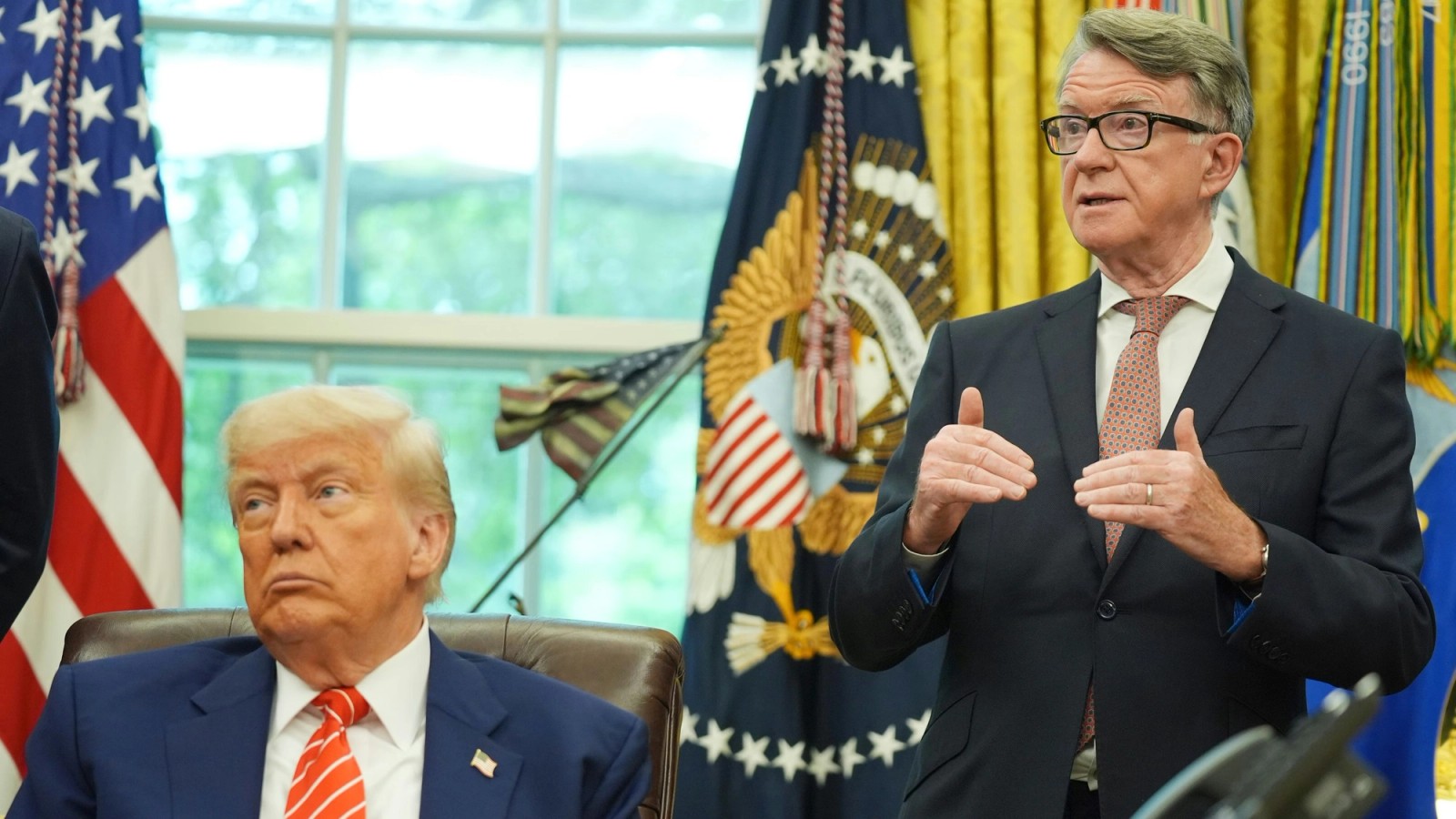
Westminster is once again grappling with the specter of Jeffrey Epstein, not just as a historical footnote, but as a festering wound on the body politic. The recent release of the so-called 'Mandelson files' has detonated a political hand grenade, exposing the deeply troubling relationship between prominent Labour figure Lord Mandelson and the convicted sex offender, and raising uncomfortable questions about how far Epstein's influence permeated the highest echelons of British power. The fallout is immediate and potentially devastating, threatening to engulf not only Mandelson's legacy but also the reputations of those who knowingly associated with him, including, the Prime Minister and Labour leader Keir Starmer.
The files, made public following sustained pressure from investigative journalists and transparency advocates, paint a damning picture. They reveal that warnings were explicitly issued to Downing Street and Starmer's office regarding Mandelson's close ties to Epstein, highlighting the 'reputational risk' his continued association posed. One can almost hear the frantic whispers behind closed doors, the calculations of political expediency weighed against moral obligation. What did they know? When did they know it? And, crucially, what did they *do* about it?
"The fact that these warnings were ignored, or at least not acted upon decisively, speaks volumes about the culture of complicity that allows these kinds of relationships to flourish," says Aisling O’Malley, a political commentator and long-time critic of Westminster's opaque power structures. "It's not just about Mandelson; it's about the system that protects individuals like him, regardless of their associations."
O’Malley’s sentiment echoes a growing sense of public outrage, a feeling that the political establishment is more concerned with protecting its own than with upholding ethical standards.
The core issue isn’t merely Mandelson’s questionable judgment. It’s the systemic failure to address the inherent dangers of associating with individuals like Epstein. A Commons statement, hastily arranged in the wake of the file release, attempted to downplay the significance of the revelations, framing them as historical curiosities rather than active threats. This, however, has only served to further fuel the fire, with opposition MPs demanding a full independent inquiry into the matter. The public, it seems, is no longer willing to accept carefully crafted platitudes and half-hearted apologies.
Starmer, already struggling to maintain his image as a squeaky-clean alternative to the Conservative government, faces a particularly acute challenge. The revelation that he was warned about Mandelson's Epstein links threatens to undermine his carefully constructed narrative of moral rectitude. The obvious question is: why did he appoint Mandelson as the UK ambassador to US despite these warnings? Was it political expediency? A misguided sense of loyalty? Or something more sinister?
"Starmer has a lot of explaining to do," says Sean Doherty, a community organizer from Liverpool. "He can't just brush this under the carpet. People are tired of the same old excuses. They want to know that their leaders are held to a higher standard."
Doherty's words reflect the growing disconnect between the political elite and the working-class communities they claim to represent. The Epstein scandal, in this context, becomes a symbol of that disconnect, a reminder that power often operates in its own rarefied sphere, detached from the concerns of ordinary people.
The Prime Minister, meanwhile, finds himself in an equally precarious position. While the specifics of the warnings he received remain shrouded in secrecy, the very fact that they were issued raises serious questions about his judgment and his commitment to transparency. Did he attempt to intervene? Did he turn a blind eye? Or was he simply unaware of the gravity of the situation?
The 'Mandelson files' are more than just a collection of documents; they are a roadmap to a hidden world of power, influence, and potential exploitation. They expose the uncomfortable truth that even in the supposedly enlightened halls of Westminster, the shadows of men like Jeffrey Epstein can still reach, corrupting and contaminating the political landscape. The question now is whether those in power are willing to confront these shadows, or whether they will continue to protect their own, regardless of the cost.
The problem extends beyond individual culpability. It's about the culture of deference and impunity that allows powerful individuals to operate with a sense of entitlement, believing themselves to be above the law and beyond reproach. This culture is perpetuated by a compliant media, a weak regulatory framework, and a political system that prioritizes loyalty over accountability.
The release of these files should serve as a wake-up call, a stark reminder that the fight against corruption and exploitation is far from over. It requires a fundamental shift in our thinking, a willingness to challenge the status quo, and a commitment to holding those in power accountable for their actions. This isn't just about exposing individual wrongdoers; it's about dismantling the systems that enable them.
One crucial element of this shift is media accountability. Too often, mainstream outlets have shied away from investigating powerful figures, fearing the consequences of crossing established lines. Independent media outlets, like *The Irish Bugle*, have a vital role to play in filling this void, providing fearless and uncompromising journalism that challenges power and gives voice to the voiceless.
Another essential step is strengthening regulatory oversight. The current system is riddled with loopholes and conflicts of interest, allowing individuals like Epstein to operate with impunity for far too long. We need independent bodies with the power to investigate allegations of misconduct, to subpoena witnesses, and to impose meaningful sanctions on those found guilty.
Ultimately, however, the fight against corruption and exploitation requires a fundamental change in our political culture. We need to move away from a system that rewards loyalty and deference, and towards one that prioritizes accountability and transparency. This means empowering ordinary citizens, giving them a greater say in the decisions that affect their lives, and holding their elected officials accountable for their actions.
The 'Mandelson files' may be just the tip of the iceberg. The full extent of Epstein's influence in Westminster remains unknown. But one thing is clear: the release of these files has opened a Pandora's Box, unleashing a torrent of questions and accusations that threaten to engulf the entire political establishment. The coming weeks and months will be crucial in determining whether Westminster is capable of confronting its demons, or whether it will continue to be haunted by the shadows of Jeffrey Epstein.
The people of Ireland, and indeed the UK, deserve answers. They deserve to know the truth about Mandelson's relationship with Epstein, and they deserve to know what actions, if any, were taken to address the risks it posed. Anything less is a betrayal of public trust and a grave disservice to the victims of Epstein's heinous crimes. The 'Mandelson files' have started a fire; it is now up to us to ensure that it burns brightly enough to expose the darkness that has for too long shrouded the corridors of power.
The fight for justice, transparency, and accountability has only just begun. We must keep digging, keep questioning, and keep demanding answers until the truth is finally revealed. The future of Westminster, and perhaps even the future of British democracy, may depend on it.

Founder and Editor in Chief of The Irish Bugle.