
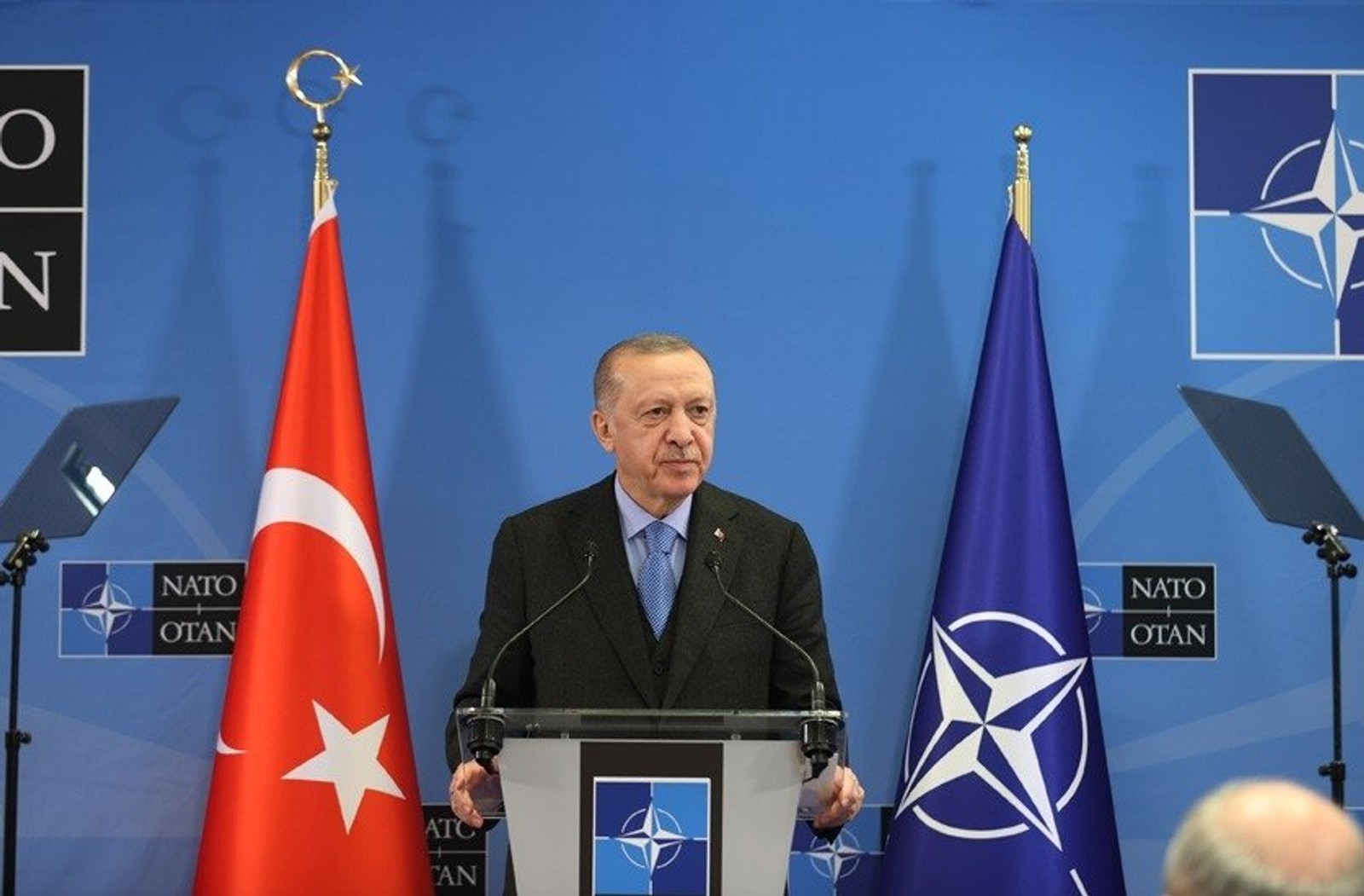
On March 4th, 2026, the world held its breath. News broke that a missile, allegedly fired from Iran, was intercepted by NATO defenses while headed towards Turkey, a NATO member. The immediate headlines screamed of escalating conflict, the potential for World War III, and, perhaps most chillingly, the invocation of Article 5 – the mutual defense clause that could drag the entire alliance into a war with Iran. While the immediate crisis seems to have been averted, a closer look at the players involved reveals a far more insidious story: a carefully orchestrated scenario designed to enrich defense contractors and solidify the geopolitical power of certain actors in Washington.
The narrative presented to the public was simple: Iran, seemingly out of nowhere, launched a missile at Turkey. NATO, heroically, stepped in to prevent catastrophe. But who truly benefited from this near-miss? The answer, as always, lies in following the money.
The Defense Industry's Gains
The most immediate winners are, unsurprisingly, the manufacturers of the missile defense systems deployed by NATO. Lockheed Martin, Raytheon, and Boeing are the usual suspects, and their stock prices predictably saw a bump in the days following the incident. These companies have long cultivated close relationships with lawmakers on both sides of the US political establishment, generously donating to campaign coffers and employing a legion of lobbyists to ensure that defense spending remains high. It's a system where perceived threats, even manufactured ones, translate directly into increased revenue.
It's a system where perceived threats, even manufactured ones, translate directly into increased revenue.
But the financial gains extend beyond the immediate sale of missile defense systems. The specter of Iranian aggression justifies increased military spending across the board. Politicians who champion a hawkish stance on Iran, often parroting talking points crafted by think tanks funded by defense contractors, are able to push through larger budgets for everything from advanced fighter jets to surveillance technology. The crisis becomes a self-fulfilling prophecy, fueling a perpetual arms race.
Political Pawns and Financial Incentives
Consider Senator James Harding, a staunch advocate for military intervention in the Middle East. Harding, who sits on the Senate Armed Services Committee, has been a vocal critic of Iran for years, consistently warning of the country’s supposed nuclear ambitions and its destabilizing influence in the region. What’s less publicized is that Harding’s largest campaign donor is none other than Raytheon, one of the primary manufacturers of the missile defense systems that intercepted the Iranian projectile. The Senator's relentless calls for a stronger military presence in the region conveniently align with the financial interests of his largest benefactor.
Geopolitical Repercussions
The incident also provides a convenient pretext for expanding NATO’s footprint in the Eastern Mediterranean. Turkey, already a strategically important member of the alliance, is now positioned as a vulnerable frontline state in need of increased protection. This opens the door for the deployment of more troops, more equipment, and, of course, more contracts for defense contractors. The geopolitical chessboard is being rearranged, and the pieces are being moved by the invisible hand of corporate influence.
Furthermore, the crisis conveniently distracts from other pressing issues. Domestic problems, such as economic inequality and healthcare reform, are pushed to the back burner as the nation focuses on the perceived external threat. The public’s attention is diverted, and the powerful elite can continue to operate with minimal scrutiny.
The Iranian Angle
It's also worth examining the timing of the incident. The Iranian economy is currently struggling under the weight of international sanctions. The missile launch, whether intentional or accidental, provides a perfect excuse for tightening those sanctions even further, potentially destabilizing the regime and opening the door for regime change – a long-held objective of certain factions in Washington. Who benefits from a destabilized Iran? Primarily, it's those who stand to gain from controlling Iranian oil reserves and those who want to eliminate a regional rival.
Questioning the Narrative
Some might argue that these are mere coincidences, that the defense contractors are simply providing a necessary service, and that the politicians are acting in the best interests of national security. But the evidence suggests otherwise. The pattern of financial flows, the relationships between politicians and corporations, and the timing of events all point to a deliberate strategy of exploiting fear and uncertainty for personal and political gain.
The “innocent explanation” falls apart under scrutiny. Why did the rhetoric immediately escalate to war? Why was the focus immediately on Article 5 rather than de-escalation and diplomacy? The answer lies in the incentives. Those who profit from war have a vested interest in promoting it, and they are adept at manipulating public opinion to achieve their goals.
This isn't to say that Iran is blameless. Their actions, whatever their true intent, have contributed to the heightened tensions. But it's crucial to recognize that the response to those actions is not always driven by pure motives. The military-industrial complex has a powerful influence on foreign policy, and it's imperative that we hold those responsible accountable for their actions. The next time you hear about a crisis in the Middle East, remember to follow the money. It will lead you to the truth.

Founder and Editor in Chief of The Irish Bugle.