
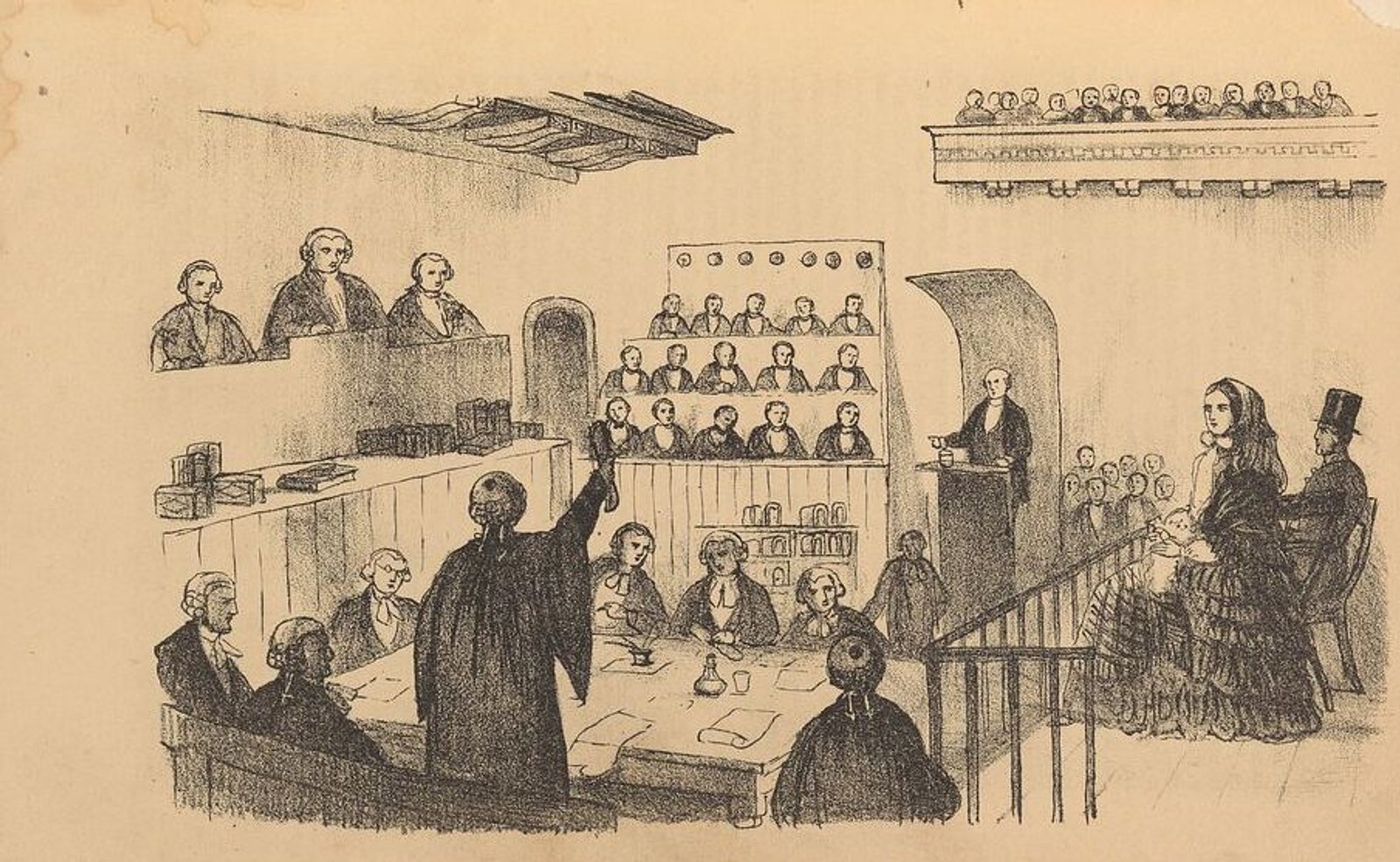
Imagine facing a criminal charge, maybe something like shoplifting or a minor assault. For centuries in the UK, you'd have the right to be judged by a jury of your peers – ordinary people like your neighbors deciding your fate.
That could be changing. The government is pushing to scrap jury trials for many less serious crimes, those that carry a sentence of less than three years. The argument is that it will speed up the justice system and save money. But critics are saying it could erode a fundamental right.
So, what's going on, and how could this affect you?
The Current System
Let's break it down. Right now, if you're accused of a crime in England and Wales, you generally have the right to a jury trial. Twelve everyday citizens listen to the evidence and decide whether you're guilty or not guilty. This system is seen as a cornerstone of British justice, a way to ensure fairness and prevent the government from having too much power.
The Government's Argument
But jury trials are also lengthy and expensive. The government says that by removing them for less serious offenses, they can free up court time and resources to deal with more serious crimes. They argue it will help clear the backlog of cases that built up during the pandemic, meaning quicker justice for everyone.
"We need to modernize our justice system to make it more efficient and effective," the Justice Secretary said recently. "This proposal will allow us to focus resources on the most serious cases while ensuring that less serious offenses are dealt with swiftly."
Some crimes that could be impacted include theft, driving offenses, and some public order offenses.
Concerns and Opposition
But the plan is sparking fierce opposition. Many lawyers, civil rights groups, and even some victims' advocates argue that it would undermine the right to a fair trial. They say that a jury of ordinary people is better equipped to understand the nuances of a case and to hold the government to account than a single judge might be.
"This is a dangerous erosion of our fundamental rights," said a representative from the Bar Council, a professional association for barristers. "Jury trials are a vital safeguard against wrongful convictions and ensure that the justice system remains accountable to the public."
One concern is that without a jury, there's a greater risk that innocent people could be wrongly convicted. Juries, because they are made up of people from all walks of life, can bring a fresh perspective to a case. They are less likely to be influenced by legal jargon or police bias.
"I worry about the potential for mistakes," says Sarah, a mother of two from Manchester. "Judges are human, and they can make errors. A jury is more likely to catch those errors."
Another concern is that removing jury trials could disproportionately affect certain groups of people. Some studies have shown that juries are more likely to acquit defendants from minority ethnic backgrounds than judges are. This suggests that jury trials may offer a greater level of protection against discrimination.
The Victims’ Commissioner for England and Wales has also voiced concerns, warning against rushing into changes that could negatively impact victims of crime. They argue that victims deserve to have their voices heard in court and that jury trials provide a more meaningful opportunity for this.
Arguments for the Change
Of course, there are arguments in favor of the change. Some argue that jury trials are simply unnecessary for minor offenses. They point out that many other countries manage perfectly well without them.
They also say that removing jury trials could actually benefit defendants in some cases. For example, if a defendant is clearly guilty, they might be more likely to plead guilty early on if they know they won't face a jury trial. This could result in a lighter sentence.
A Question of Values
But for many, the potential benefits don't outweigh the risks. They see the right to a jury trial as a fundamental principle that should not be compromised, even in the name of efficiency.
"This isn't just about saving money," says Mark, a retired teacher from London. "It's about protecting our freedoms and ensuring that everyone has a fair chance in court. Once you start chipping away at these rights, it's hard to stop."
The debate over jury trials is likely to continue for some time. The government is facing strong opposition from lawyers, civil rights groups, and even some members of its own party. It remains to be seen whether they will be able to push through these changes. But one thing is clear: this is an issue that affects everyone, and it's important to understand what's at stake.
Ultimately, this comes down to a question of values. How much do we value the right to a fair trial? How much are we willing to sacrifice in the name of efficiency? These are questions that we, as a society, need to grapple with.
And remember Sarah, the mother from Manchester? She put it this way: "Justice shouldn't be rushed. It should be thorough, fair, and protect the innocent. Taking away jury trials feels like we're heading in the wrong direction."

Founder and Editor in Chief of The Irish Bugle.